Today, I will introduce 50 varieties of succulents to you. I hope you like them...
The leaves are similar to those of pine trees, so they are called Tasong. It is blue-green all the year round.
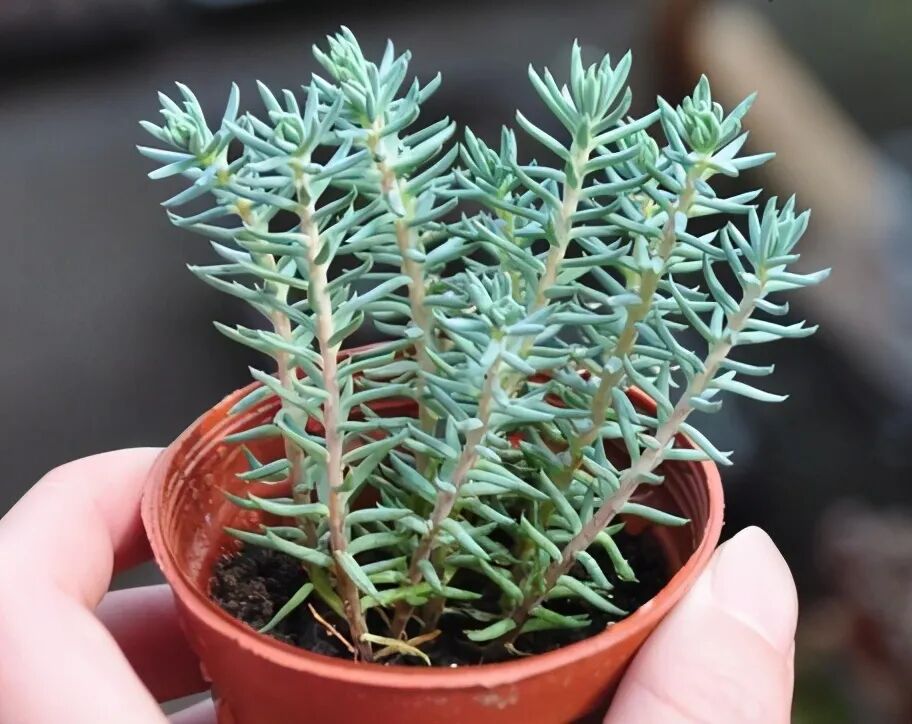
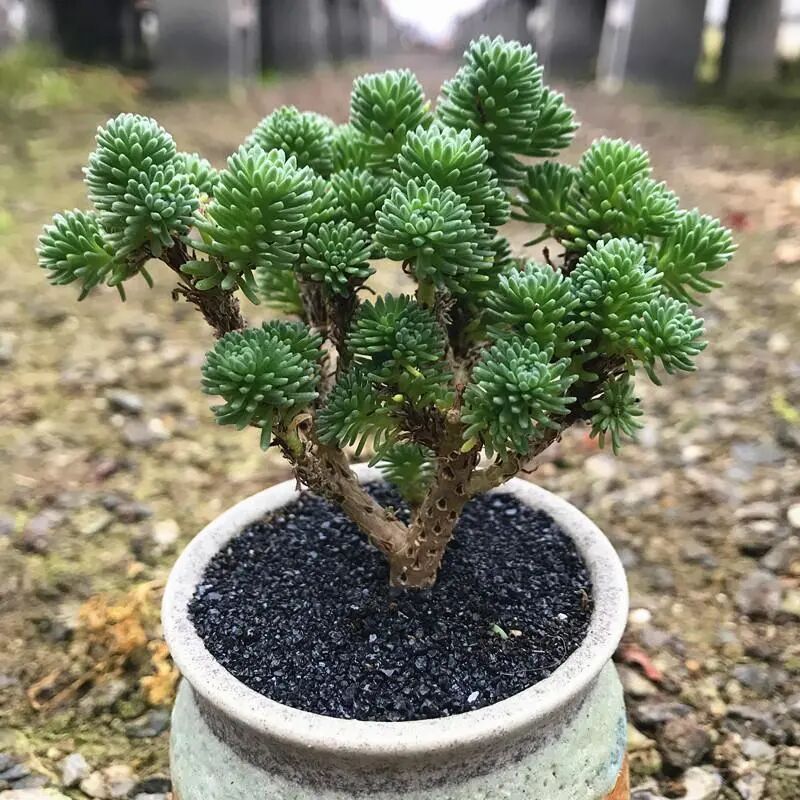
The fleshy leaves are approximately needle-shaped, clustered at the front end of the branches, lush and green. Pine bulbous plants are short, with short branches, and the plant type is approximately globular. The new branches are light green, and then gradually turn gray-white.
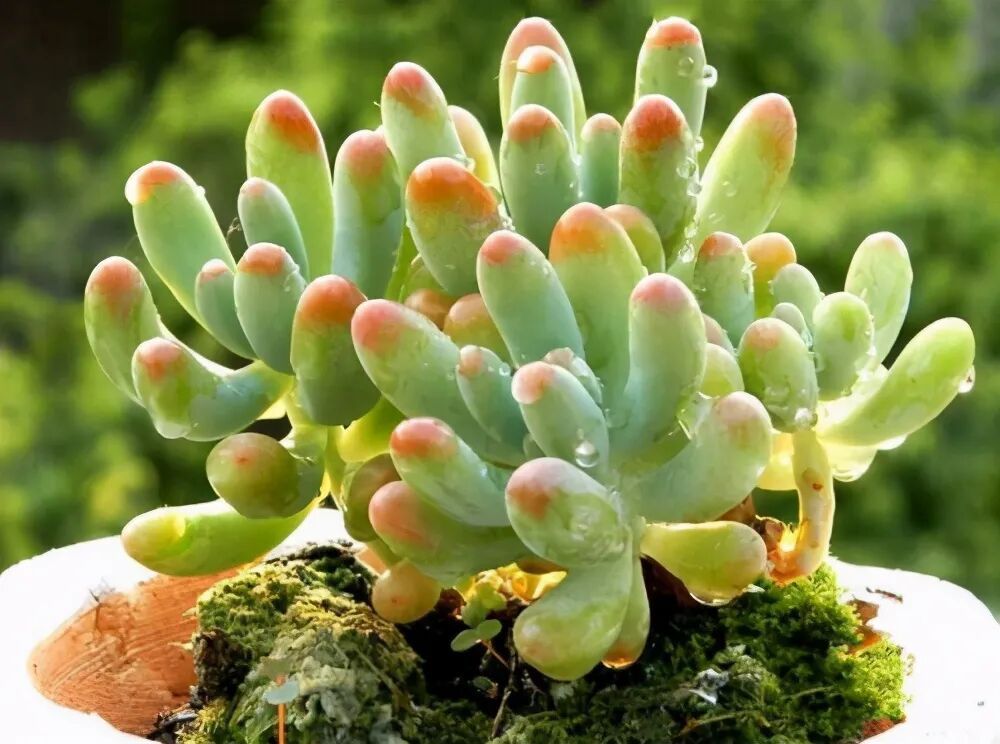
The leaves are fleshy and cylindrical, the surface is flat and slightly curved upward and inward, the top is rounded and blunt, and loosely clustered at the top of the branches. The leaf color is gray-green or light blue-green, with orange or orange-yellow at the apex in full sunny conditions.
Fleshy leaves obovate, with undulate teeth, verticillate or opposite. The underground stems are thick, the above-ground stems are clustered, thick and upright, and the whole plant is slightly covered with white powder and gray-green. The plants are neat, the corymbs are dense as flat heads, and the group effect is excellent when flowering. Common flower colors are white, purple and rose red varieties.
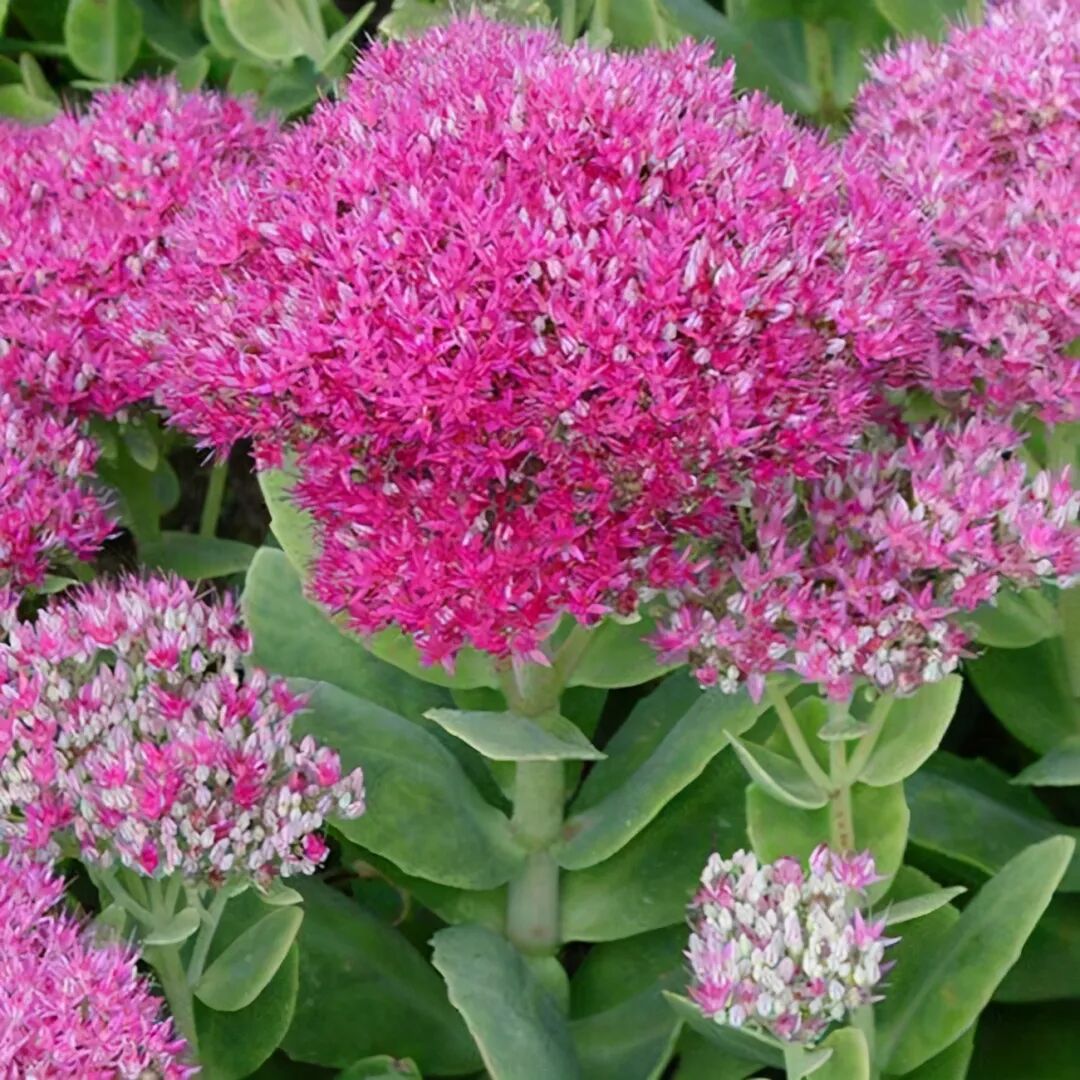
The leaves are spoon-shaped, the leaf margin rolls downward, like a boat-shaped, with thick white powder on the surface, and the leaf margin is light pink due to light. The leaf shape is very peculiar, and the middle part of the leaf tip is obviously wrinkled towards the central growth point.
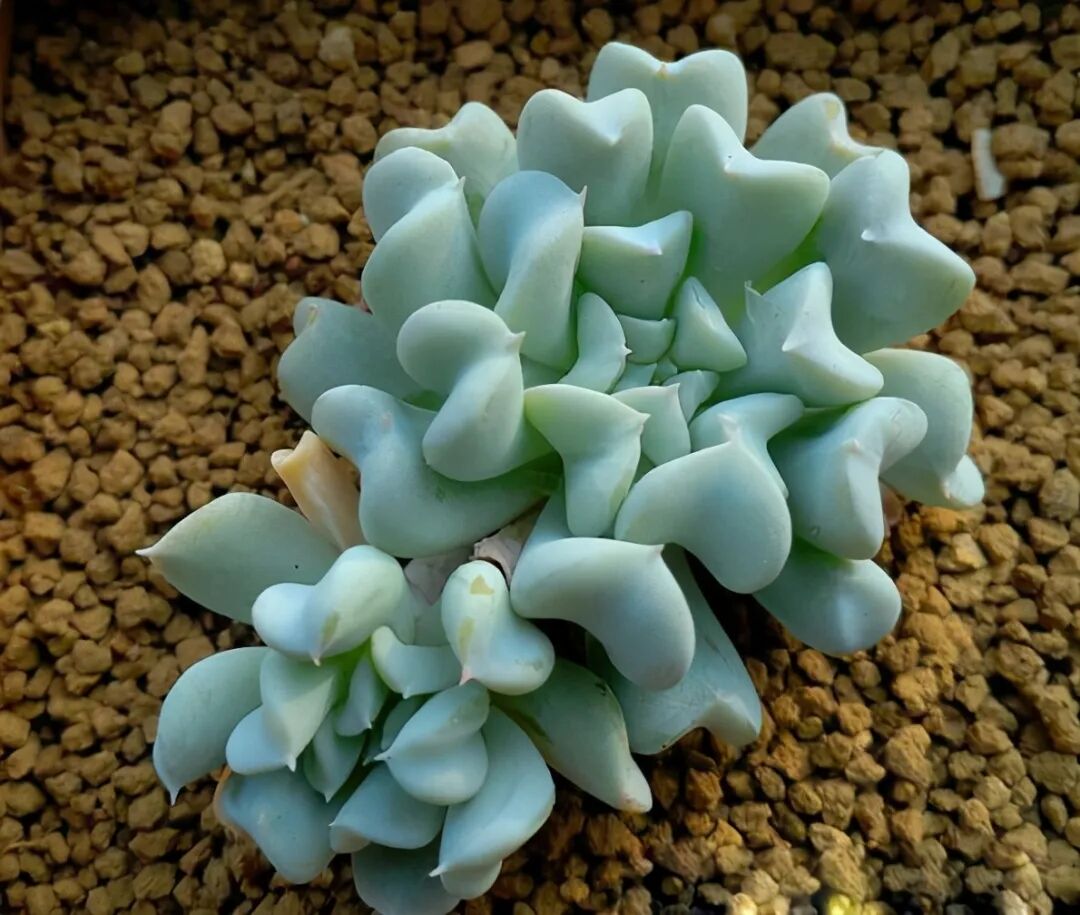
The leaves are long spoon-shaped, thin, with small tips at the apex and narrow at the base, closely arranged in a rosette leaf disk. The leaves are blue-off-white, covered with thick white powder.
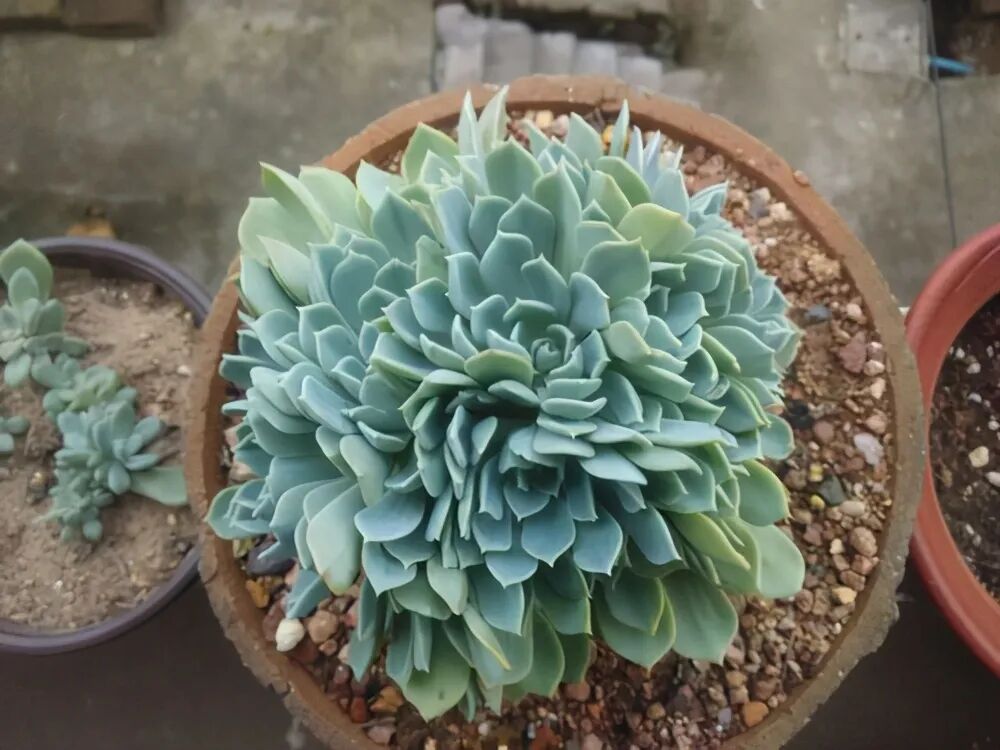
The leaf blade is ovoid, with white frosty powder, the apex has a small tip, and the edge is translucent. The leaves are gray-green, tightly arranged, and the outline is delicate and elegant. In a sunny environment, they will show an elegant lotus color, which is quite like a small rose made of jade.
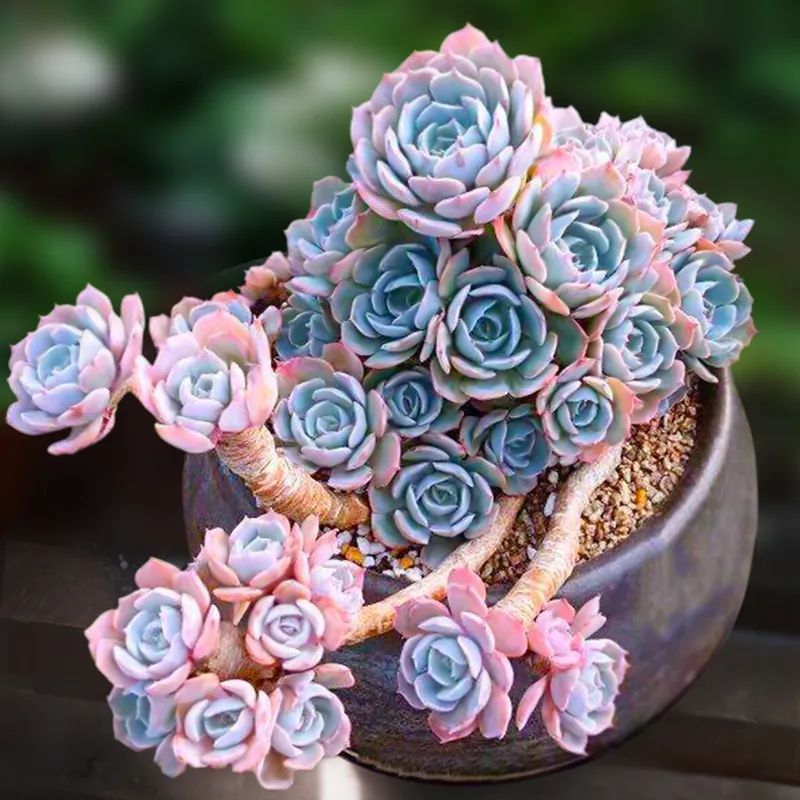
The blade leaf is heart-shaped or long triangular, the base is large, gradually smaller, and the tip is smallest, nearly pointed, forming a pagoda-shape. Leaves sessile, opposite, densely arranged in four columns. The plants are short, grow upright, and sometimes creeping. The leaves are dark green in color, reddish brown or brown in cold seasons of winter and early spring or in sunny conditions, with white cuticles on the leaf margins.
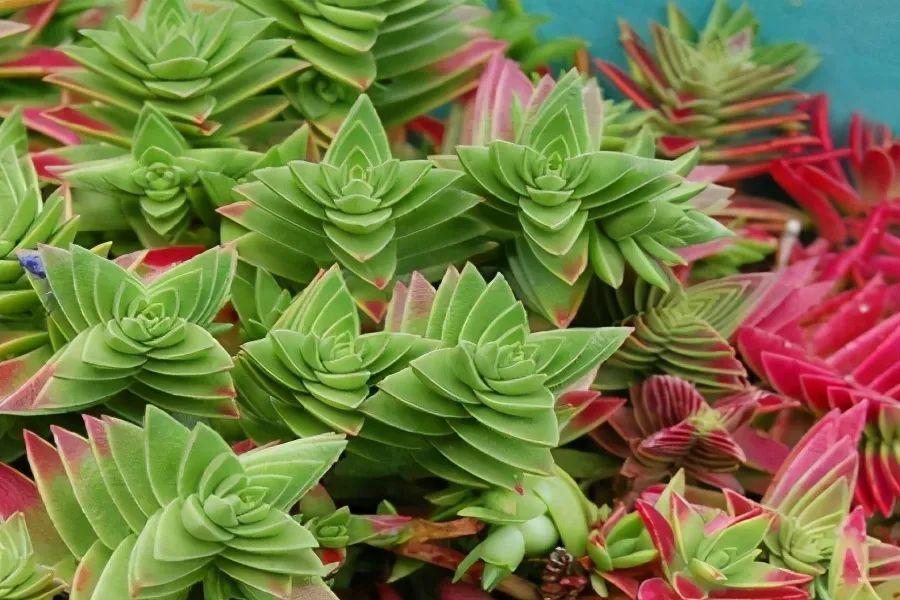
The leaves are fleshy, obovate to shovel-shaped, with blunt apex, sharp leaf tip, concave in the middle of the leaf surface, and transparent leaf margin. The leaves are closely arranged in a rosette. Lina lotus is pale pink all year round, with a brownish dark green skin, covered with lavender to light pink waxy cream powder.
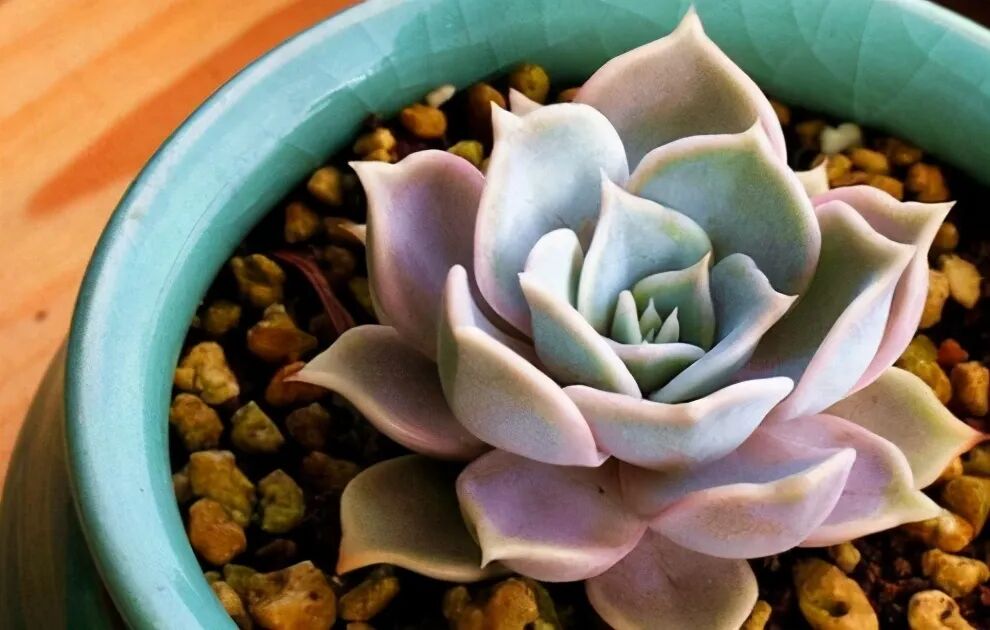
The leaves are thick and full, with high transparency like jelly, small and cute, don't grow very big, and it is easy to form a group posture. It is advisable to grow in half-shade.
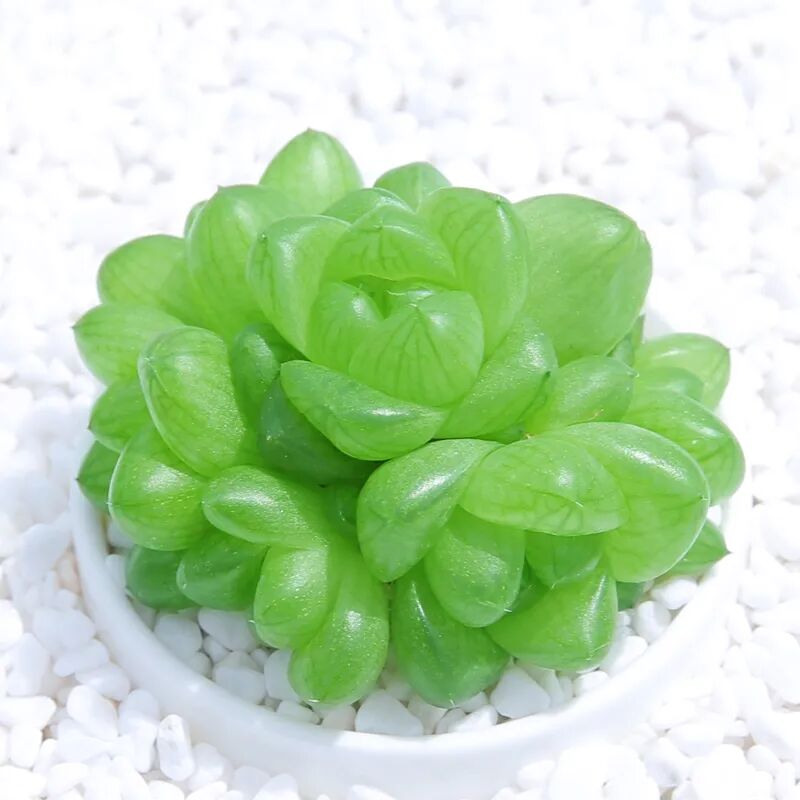
The leaf epidermis is hard, the color is changeable, and the top has dark dendritic concave lines or pattern spots. There is a crack at the top of the plant, and flowers in the crack. The flowering period is from midsummer to mid-autumn.
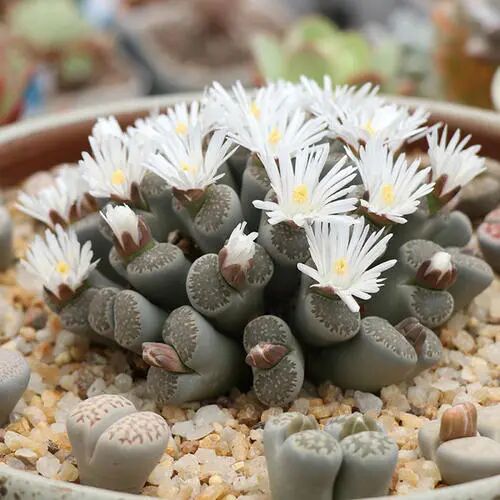
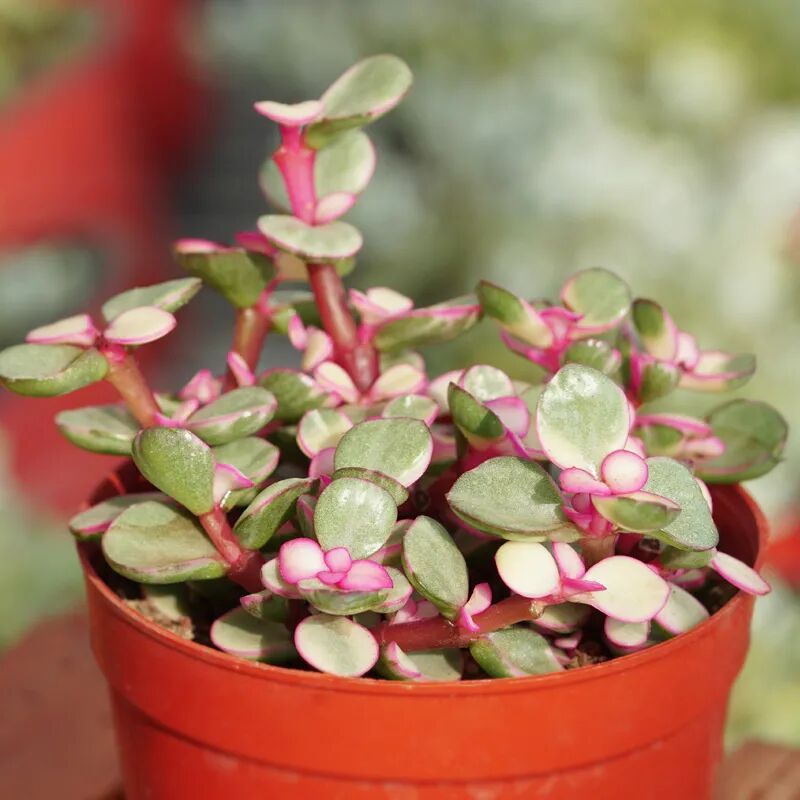
The leaves are obovate, mostly yellowish-white, only a small part of the center is light green, alternately opposite. The plants are shorter, the branches are thinner, and the fleshy stems are reddish brown (new stems) or off-white (old stems). The edges of the small flowers are pale pink.
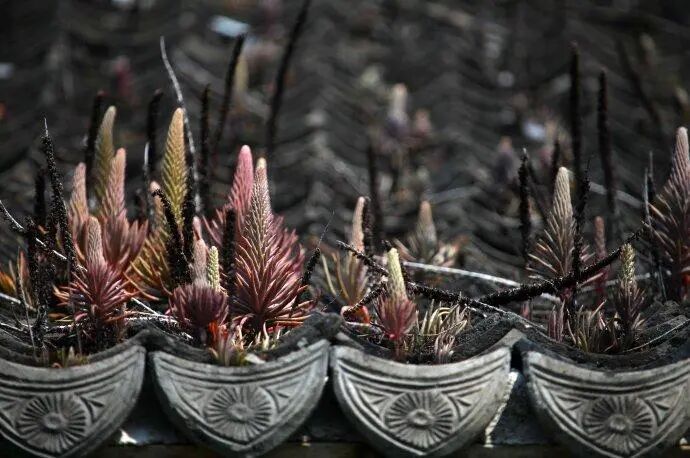
Leaves linear to lanceolate, spiny, alternate. The inflorescence is compact and pyramidal. It is said that old houses will grow on the roofs.
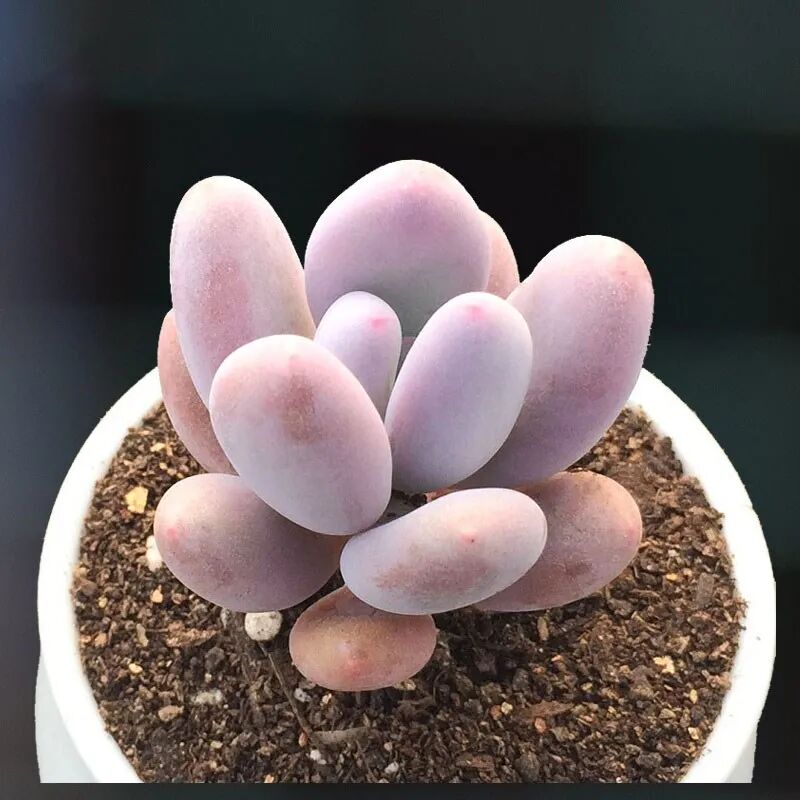
The leaves are fleshy and obovate, the apex is smooth and obtuse, with a slight obtuse tip, the abaxial side of the leaves is rounded and convex, and the obverse side is flat. The leaves are alternate and arranged in an elongated rosette. The leaves can turn pink in sunny and large temperature difference environment, and the surface of the leaves is covered with white powder.
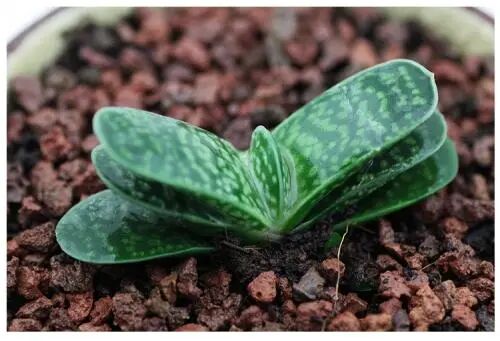
The leaves are fleshy and thick, tongue-like, with smooth leaf surface and white spots on them. The leaves are usually all green, and the leaves are red after exposure to the sun. The plant is shaped like an ingot.
Leaf blade obovate, apex obtuse, opposite, tightly arranged. The leaves are pale green or yellow-green, covered with thick white powder, and the leaf margin is red in full sunshine.
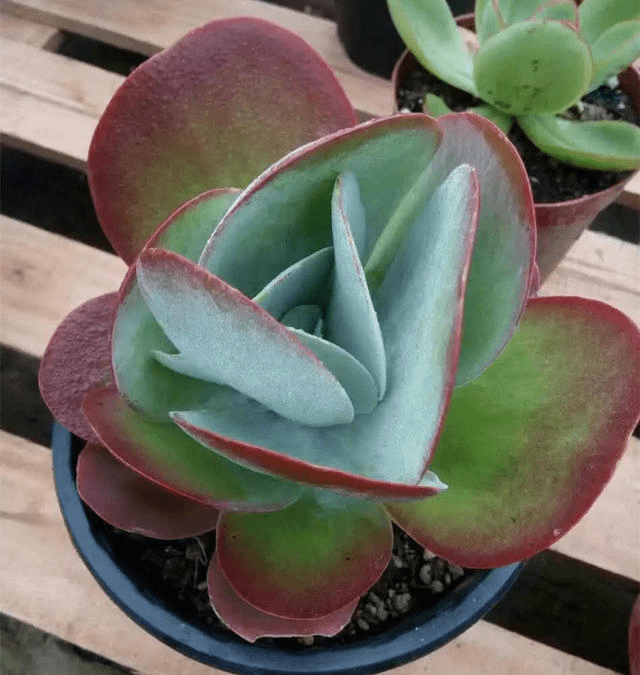
Leaves obovoid, alternate. The leaves are fleshy, dark green like emerald, and are very bright and beautiful in sunlight.
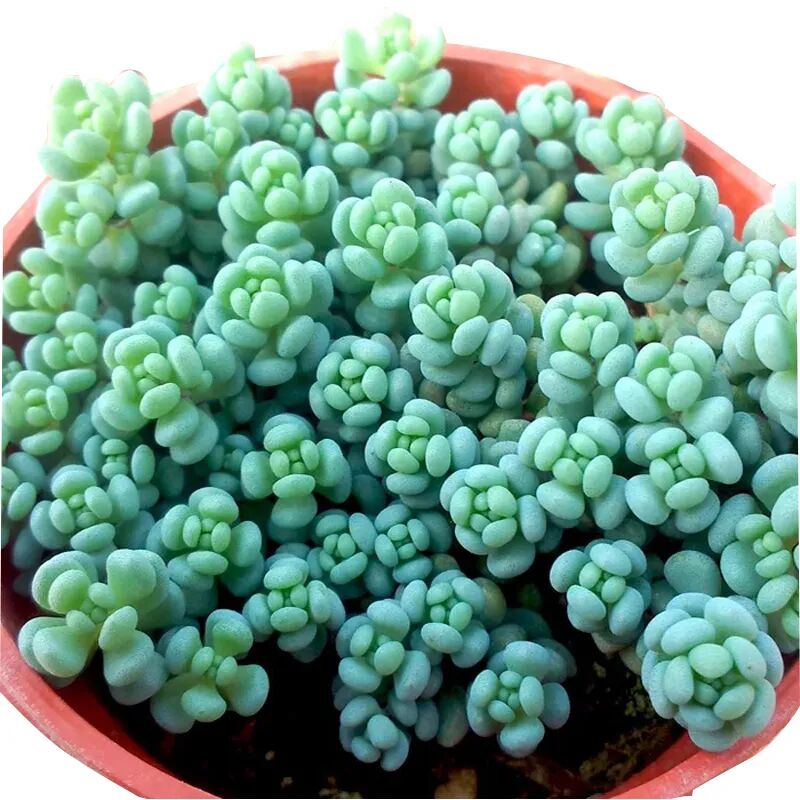
Flowers and leaves on a cold moonlight night
The leaves are thin, obovate, with finely serrated edges, clustered at the branch heads and arranged in a rosette shape. The leaves are green in the center with yellow or slightly pinkish margins (there are also varieties with yellow in the center of the leaves and green margins).
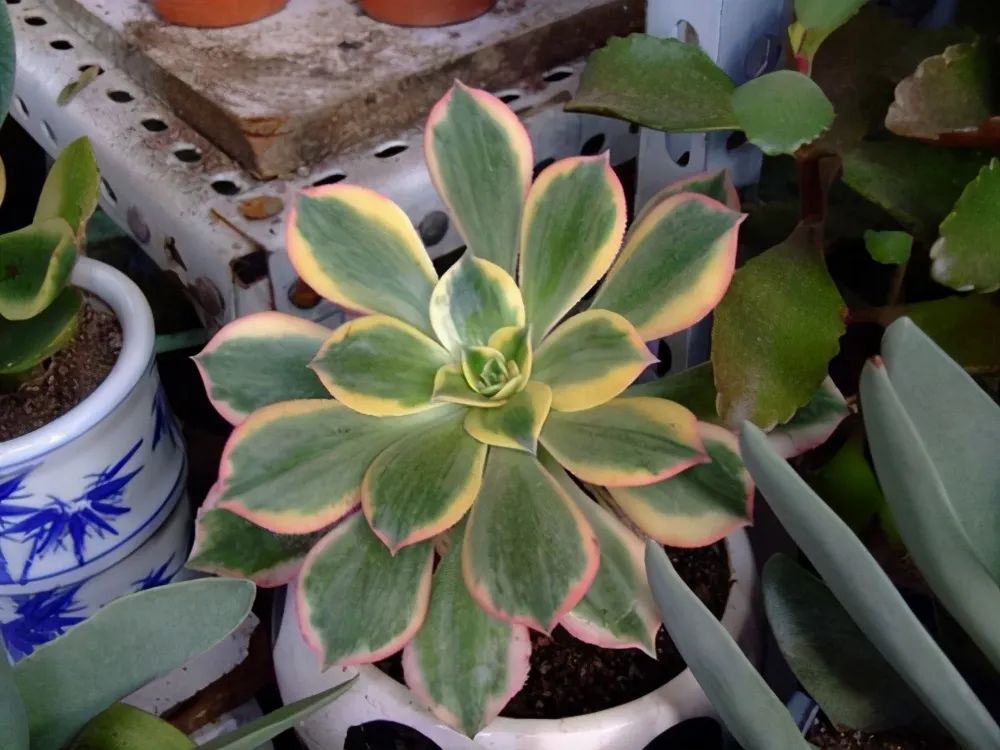
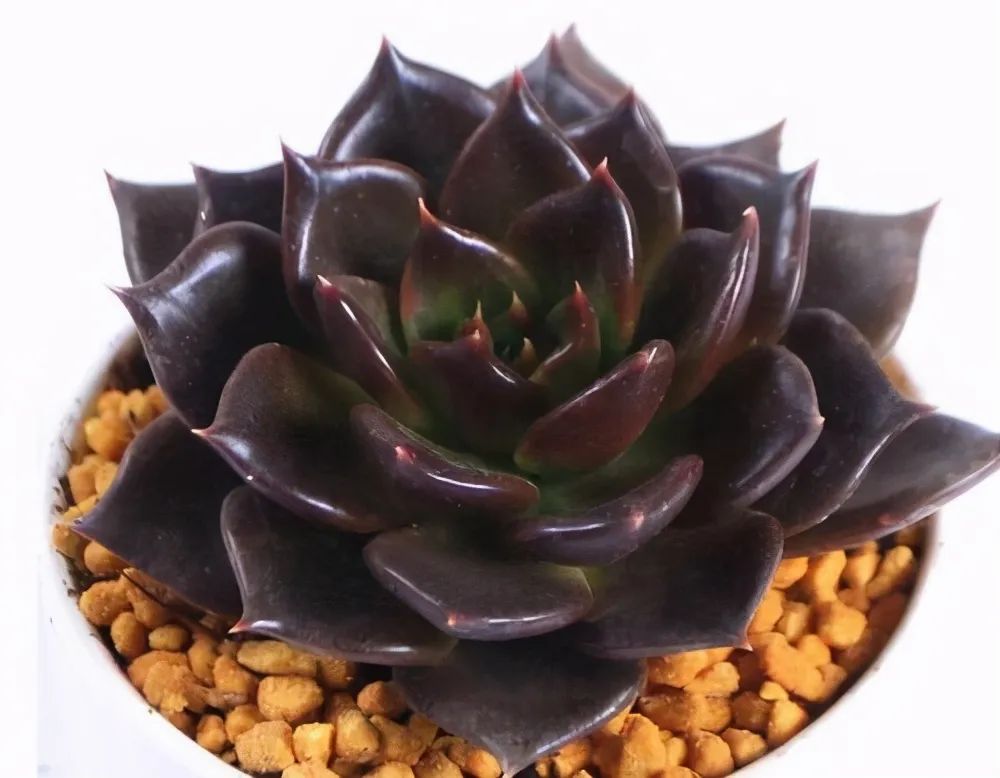
The blades are spoon-shaped, slightly thick, with small tips at the top, arranged in a rosette shape. The leaves are black and purple, like peonies blooming. It grows quickly and has lush branches and leaves.
The leaves are spoon-shaped, wide (the leaves can reach 15 cm in length and 5-7 cm in width), arranged in a rosette shape, and the whole plant is covered with white powder. The leaf color is generally light green or light blue, and it is easy to gradually turn pink from the leaf edge or bottom leaves in the environment of large temperature difference or low temperature and long sunshine time.
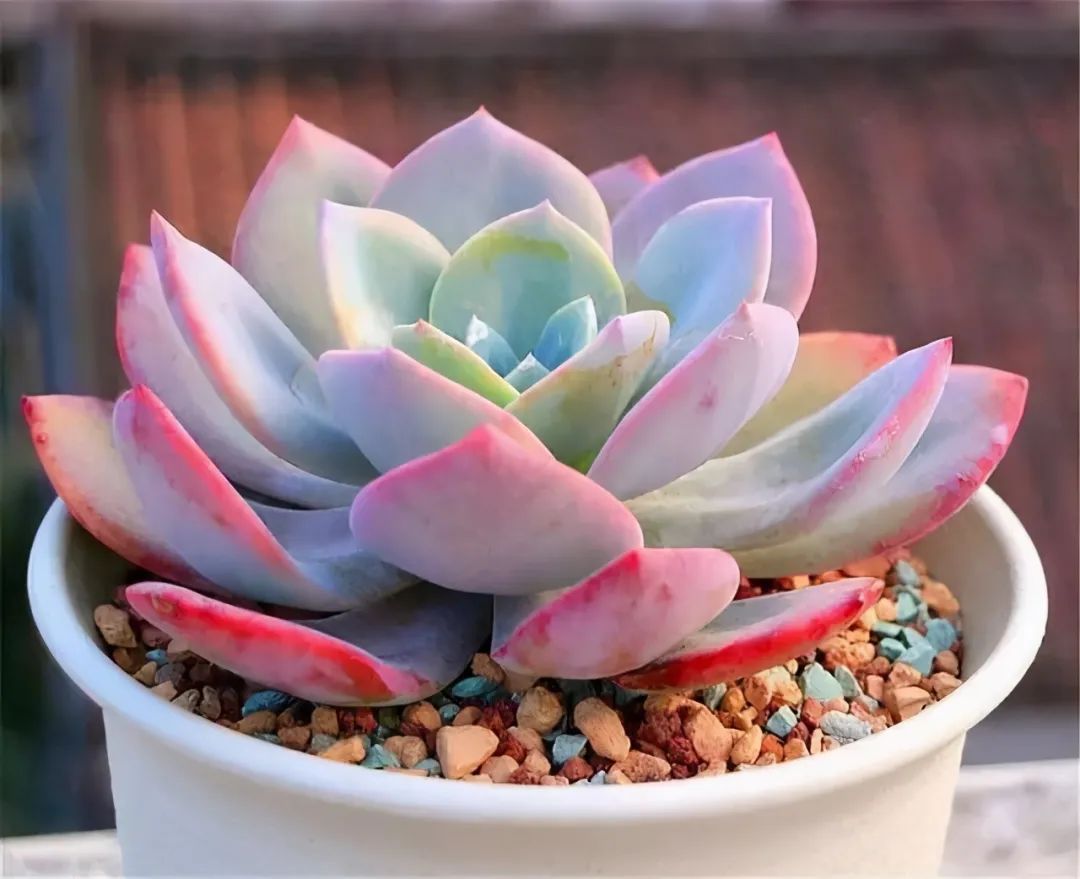
Square scale green pagoda
The leaves are green most of the time and turn red when the temperature difference increases and the sunshine is sufficient
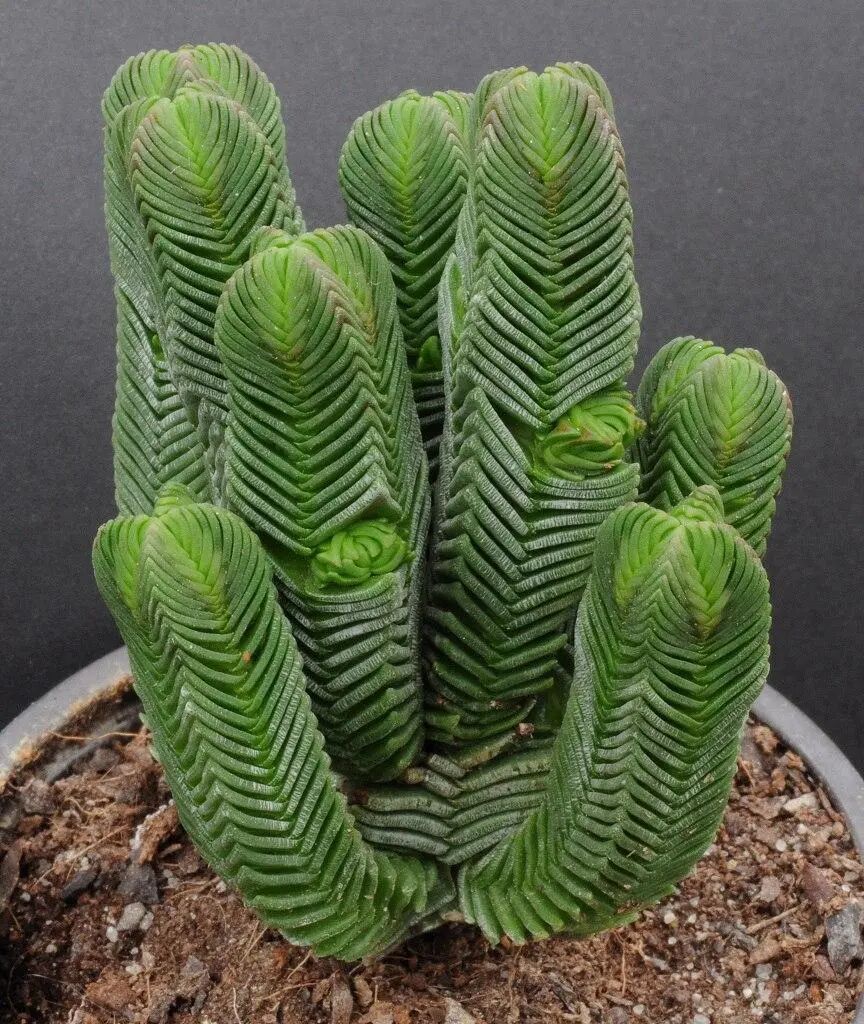
The leaves are heart-shaped or long triangular, piled up in a pagoda shape. The leaves are dark green in color (reddish brown or brown in winter and spring), with slightly red edges and white fluff.
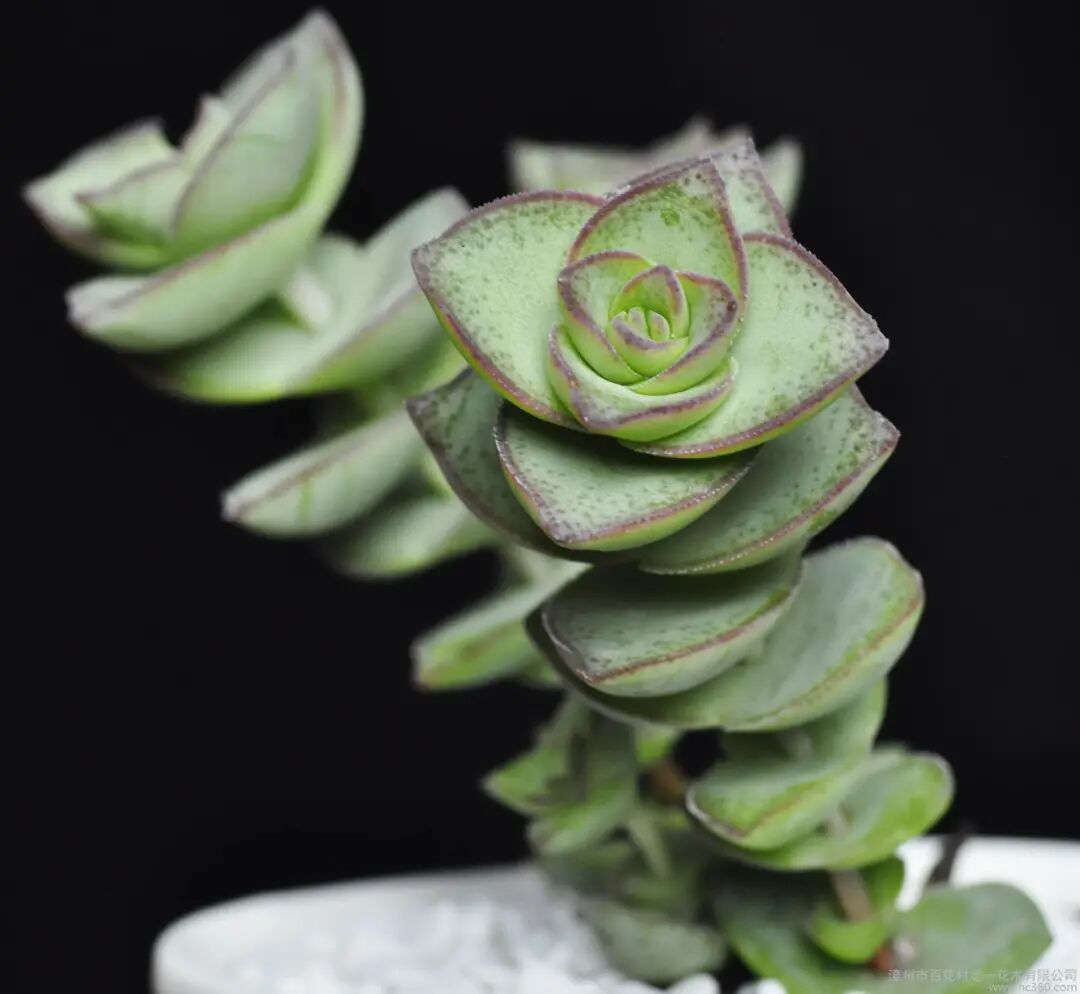
The leaves are droplet-shaped and striped. The stem grows upright or prostrate, and the surface of the stem and leaf is covered with white powder.
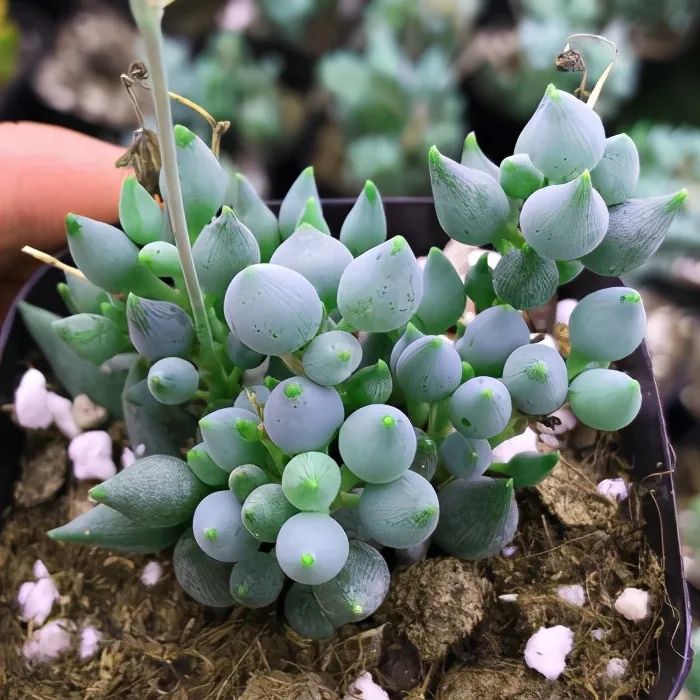
The leaves are obovate, turquoise, slightly white powdery, and the margin and base of the leaves are purple. The stems and branches are green, sometimes slightly purple, the surface is rough, and there are scales falling off from old leaves.
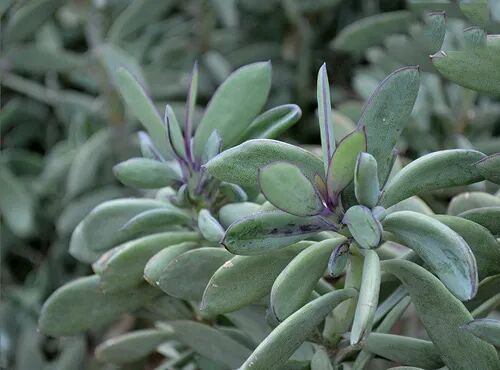
The leaves are oblong and oval, with white spots on the surface and white villi on the top. Leaf color dark green, opposite. The stems are thick and plump.
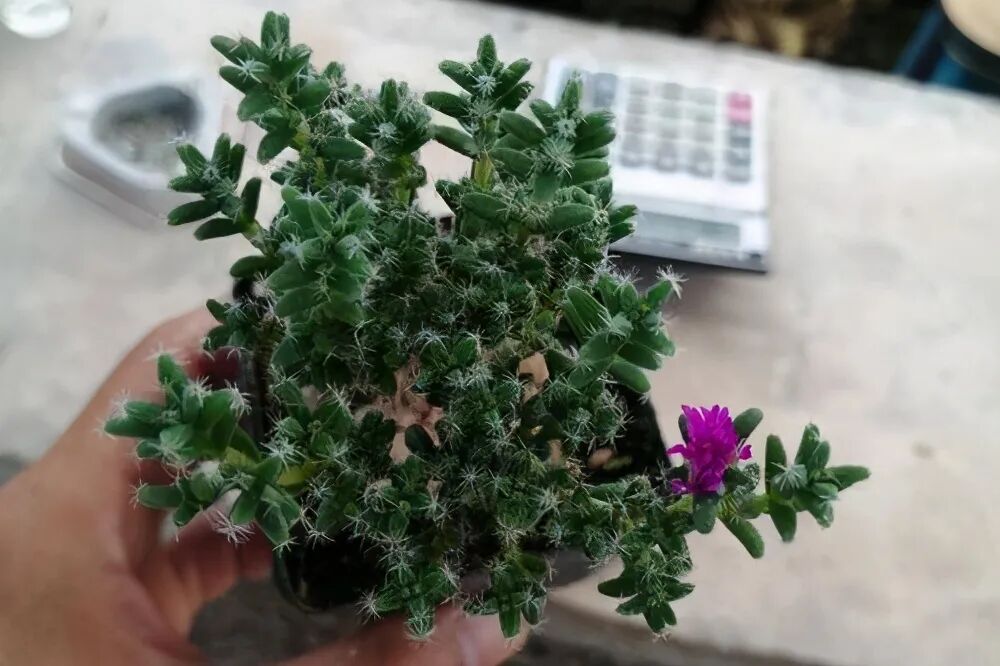
The leaves are thick and fleshy, slightly covered with white powder, and the bases of the leaves are connected together, alternately opposite. There are translucent lines on the leaf margin and back of the leaf. The leaf tips and margins will be slightly purplish in full sun.
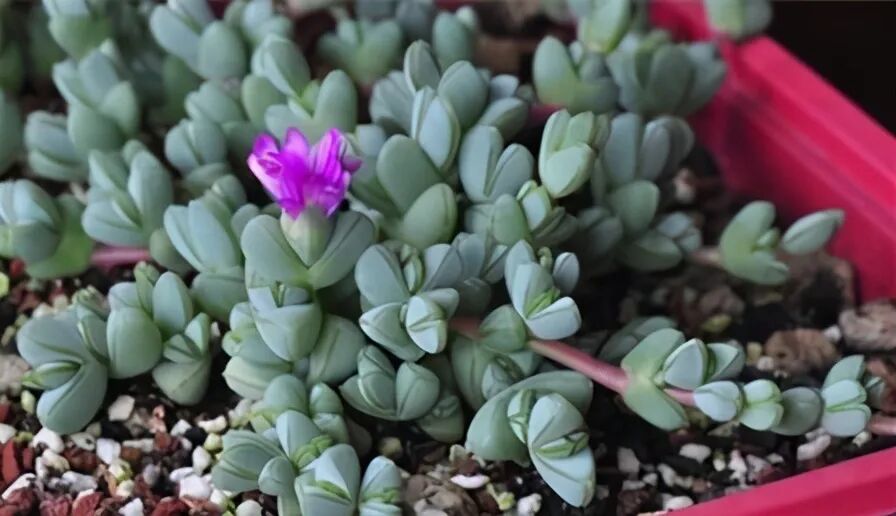
The leaves are fleshy and have two morphologies (the leaves are slender and opposite in the growing period, often unconnected; the leaves are short and thick, hemispherical in the dormant period, and the opposite leaves are highly connected).
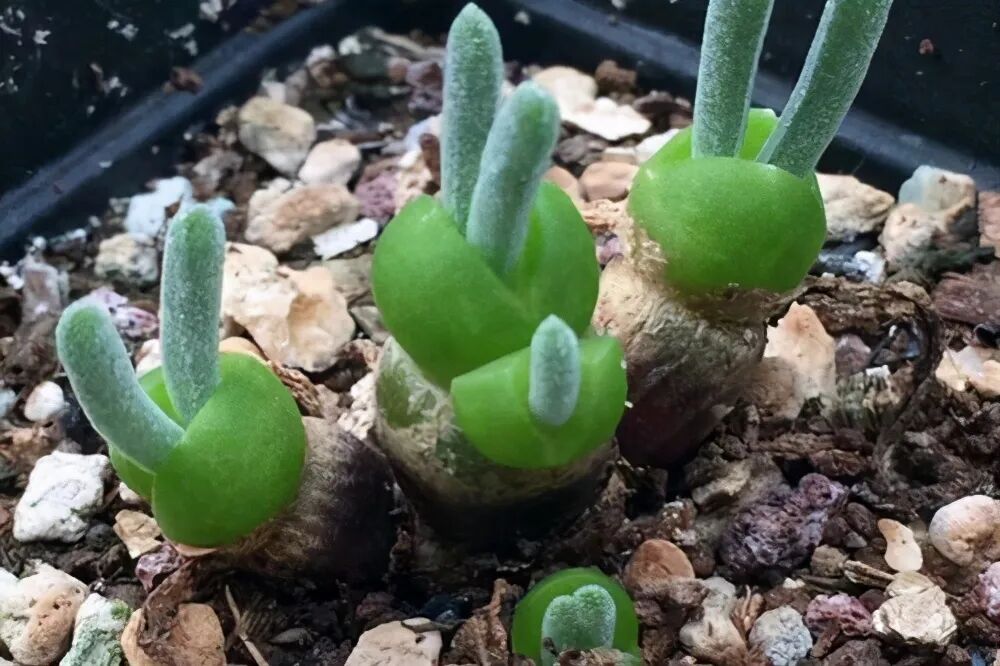
The leaves are long, and the cross section is very similar to irregular circles or triangles. The leaves are long, fleshy, and easy to break. The leaves grow opposite.
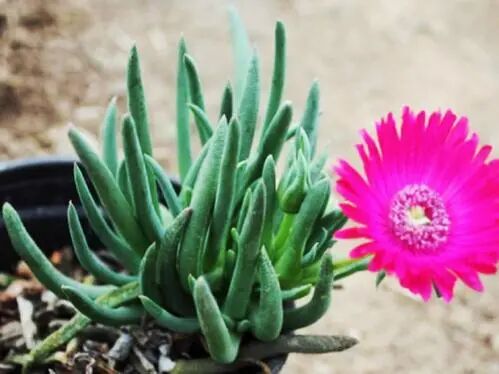
The leaves are fleshy and juicy, triangular, with small serrations on the edges, and are inserted at the stem nodes. The stem branches are creeping or upright, the old branches are brown-red, and the young branches are slightly light red or yellow-green.
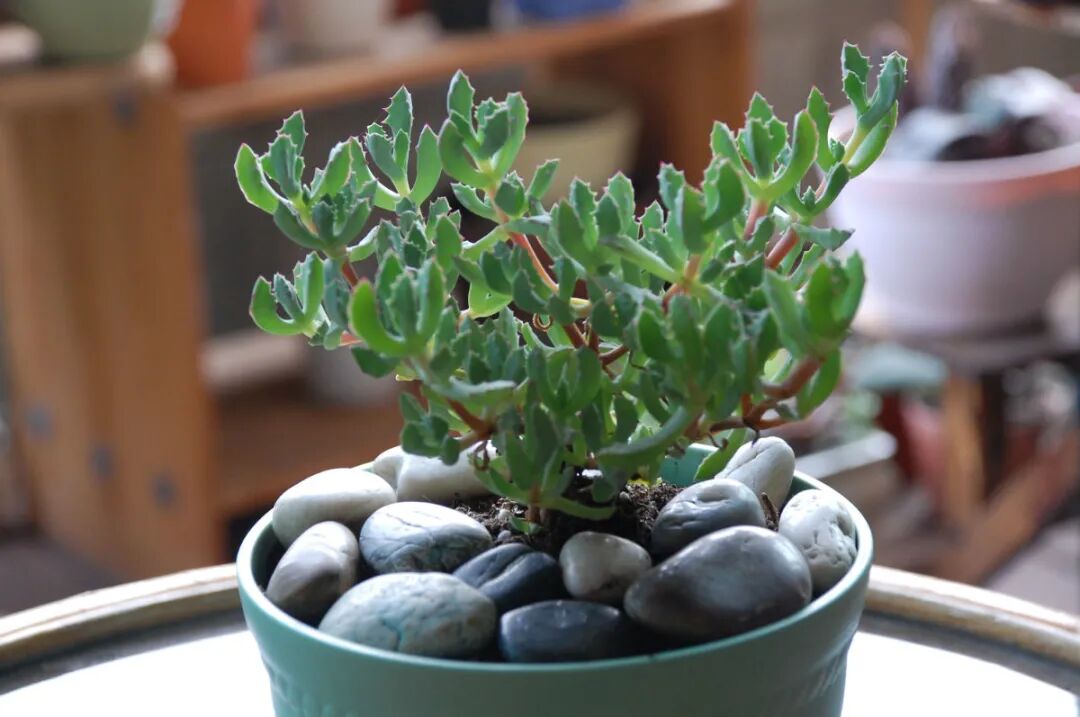
The leaves are very fleshy, the surface is covered with very small transparent glassy particles, the apex of the leaves is thickened, and the opposite arrangement resembles rabbit ears. The leaves are green and reddish in plenty of light. The old stems are light brown, and the tender stems are green, thin, and densely covered with very fine soft fluff.
The leaves are triangular and flat rod-shaped, the leaf surface is flat, the back is raised, and they are arranged in a rosette shape. The leaves are soft, short and fat, usually thick or truncated at the top, transparent or translucent, with obvious veins. The whole leaves have yellow or white longitudinal stripes, and a few leaves are yellow or white.
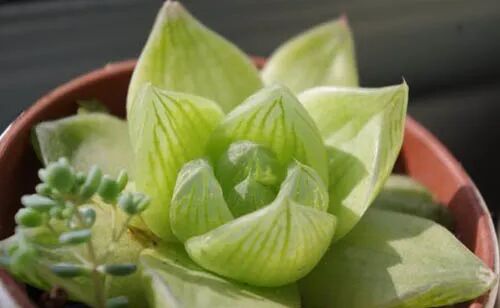
The blades are oblong or spoon-shaped, the blades are very thick, and the blades are tightly connected to each other, looking like a rosette shape. The leaves are emerald green, with dark brown stripes or cyan patches in the middle, and pink margins. The mesophyll is translucent, that is, the middle is tightly connected, and then the top gradually expands outward.
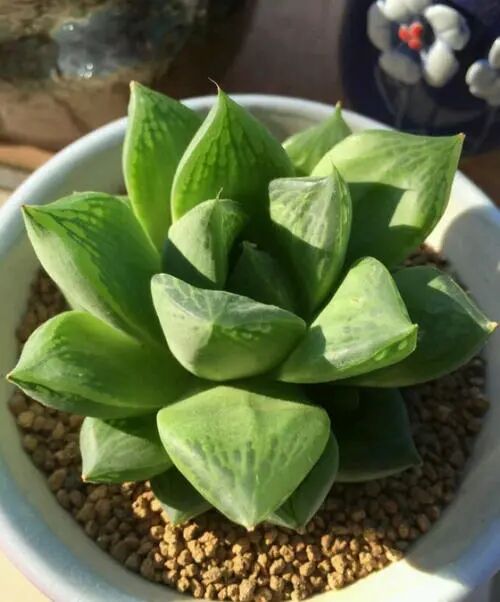
The leaf leaves are broad ovate-triangular, with small tips at the leaf ends, curved and extended outwards, and the flesh is hard and translucent, arranged in a rosette shape. The leaves are dark green, slightly red on the back, and the lines on the leaves resemble dragon scales or snakeskin.
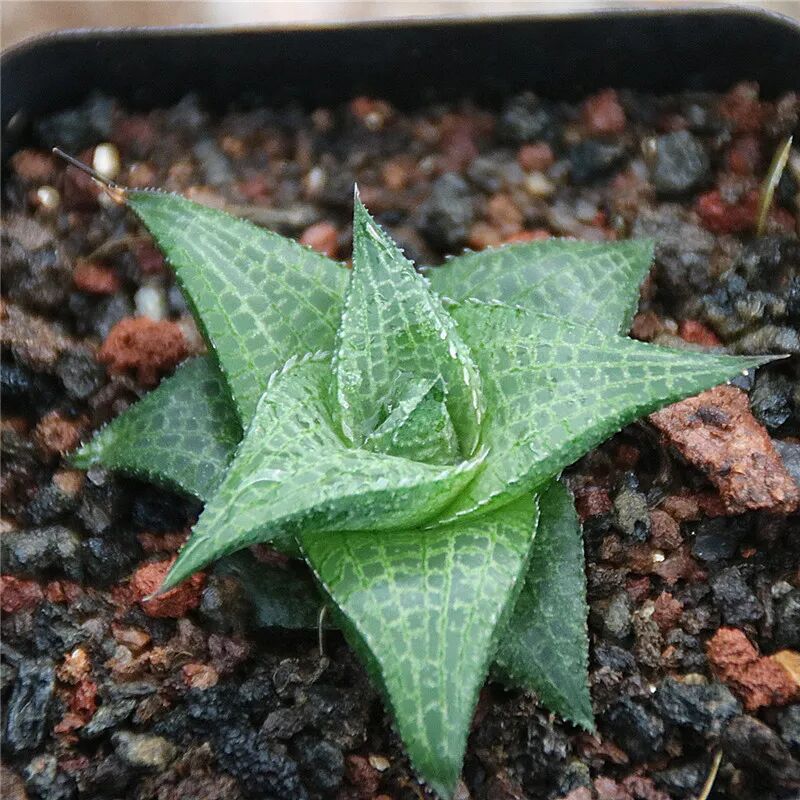
The leaves are translucent and moist, especially shiny. The leaves are thin and full, and the upper half is transparent. The lines on the leaves are very similar to the lines on the wings of cicadas.
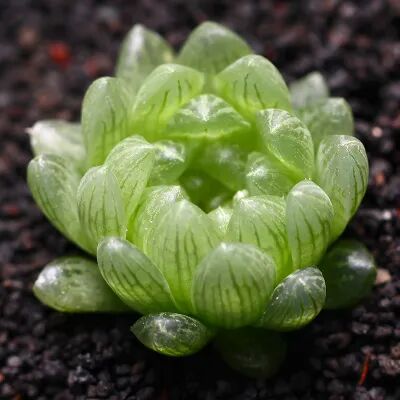
The leaves are thick and full, and the upper half is transparent or translucent, arranged in a compact rosette. The leaves are emerald green, with dark linear veins. Under the condition of sufficient sunshine, the veins are brown, and there are small "whiskers" at the top of the leaves.
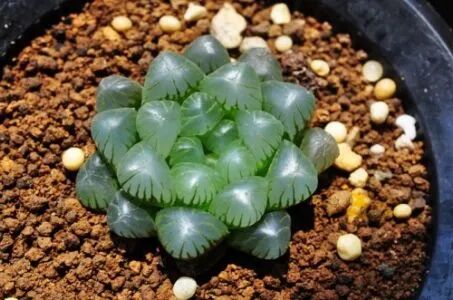
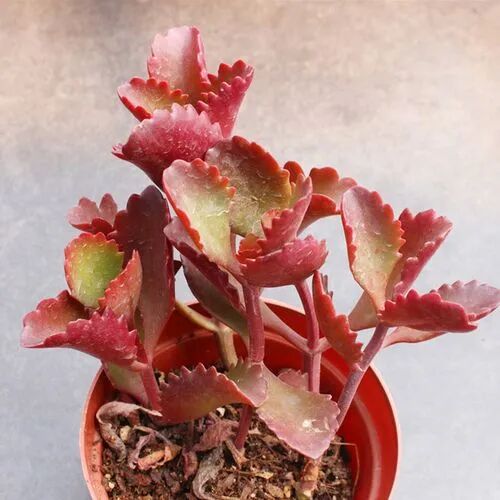
The leaves are elliptic, the surface is smooth and shiny, and the edges are toothed, alternately opposite. The leaves are deep red and turn green when there is no light. Stems erect, purple-red.
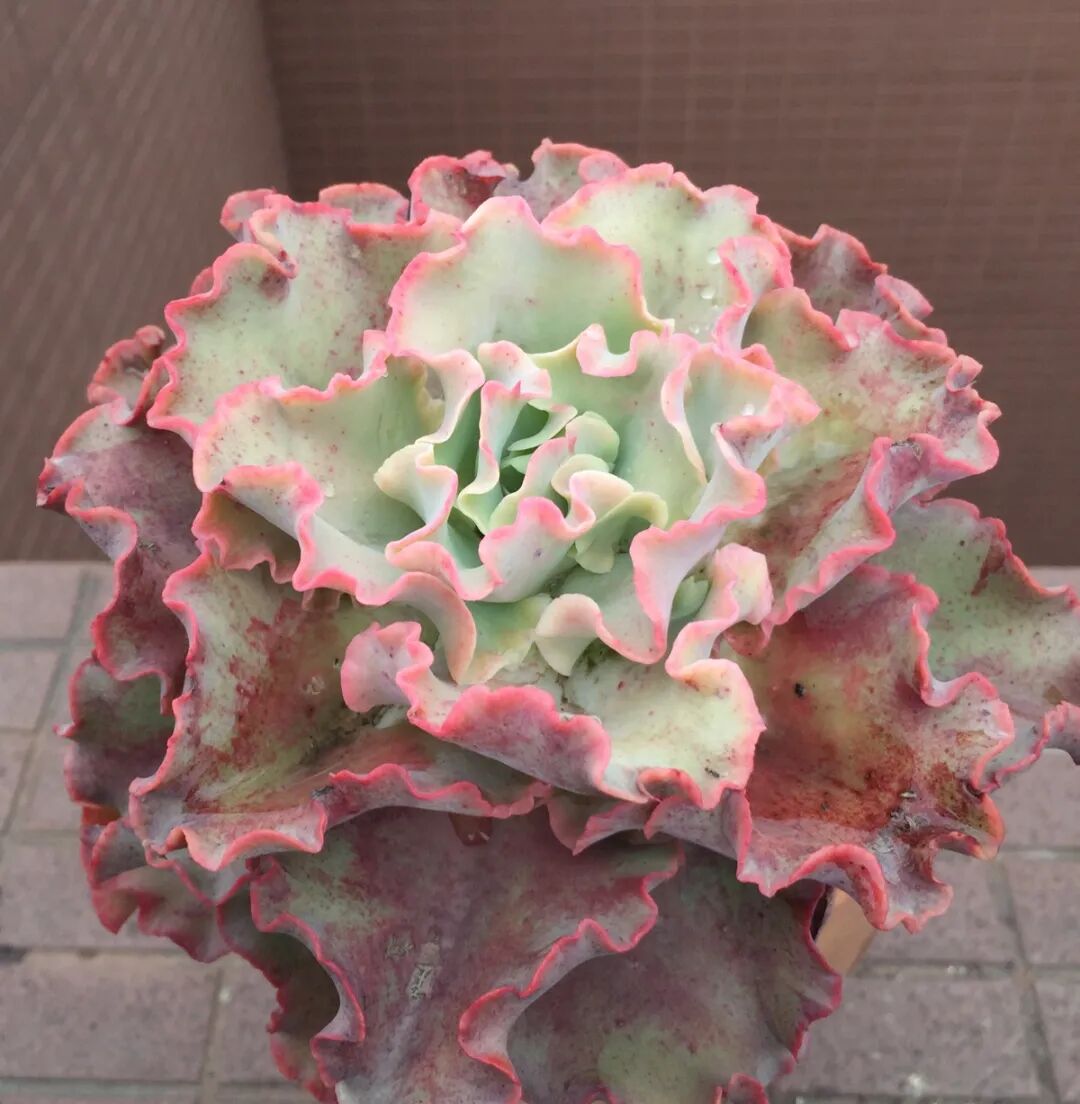
The leaves are round, with large wavy folds on the leaf margin, and they are densely arranged in a rosette shape. The color of the leaves is emerald green to reddish brown (the color changes from blue-purple to orange-red with the change of light), the leaf margin often appears pink, the leaf surface has slightly white powder, and the white powder of the old leaves is smooth after falling.
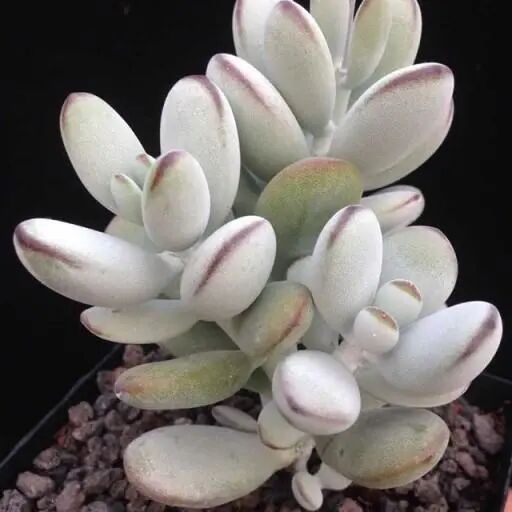
The leaves are short rod-shaped opposite, the leaves are gray-green in color, the surface is covered with white powder, and the periphery of the leaf margin is inlaid with purple-red. The shape of the leaves varies (there are different leaf shapes such as short round and thick square).
Middle-spotted lotus palm
Leaf blade suborbicular or obovate, apex obtuse subtruncate. The leaves are blue-gray, with white spots in the middle of the leaves and no petioles. The rhizome is thick, with many filamentous aerial roots.
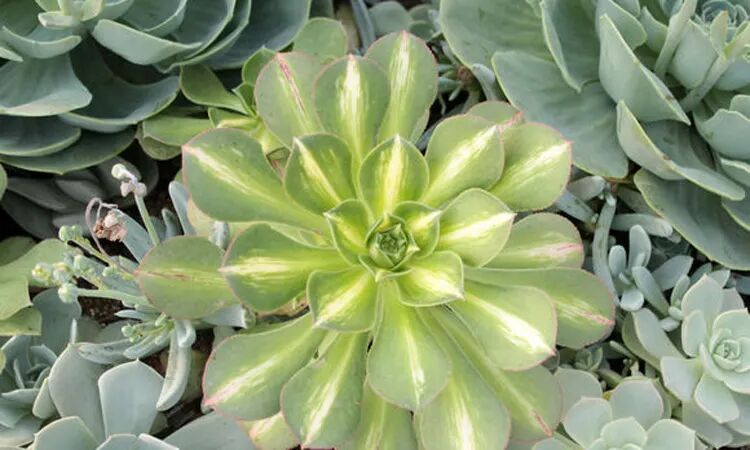
The leaves are oval-hemispherical, and the epidermis has white translucent fleshy spines (the fleshy spines of old leaves often fall off, leaving round scars). Leaf blades dark green, connate at base. Old branches are grayish brown or light brown, and new branches are light green with small white protrusions.
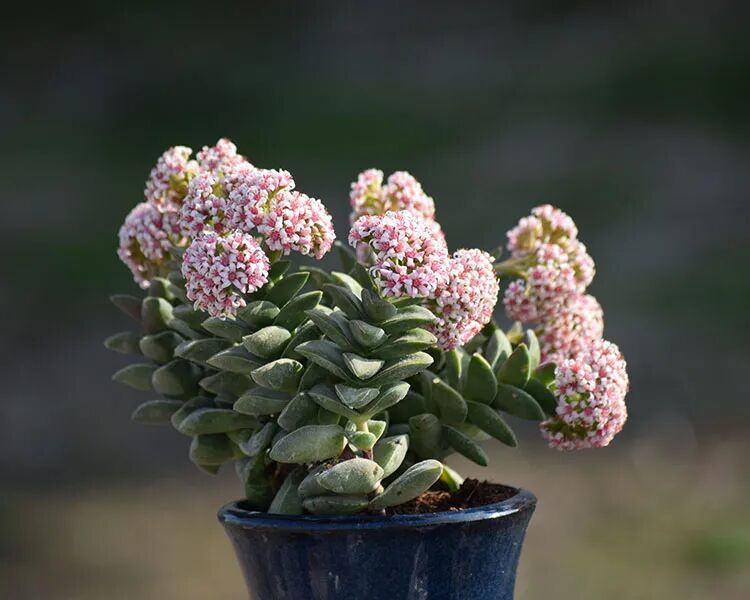
The front end of the leaves is triangular, densely opposite in pairs. The leaves are pale grayish-green to dark green. Flowering in spring, the flowers are clustered at the top, pink, large and fragrant.
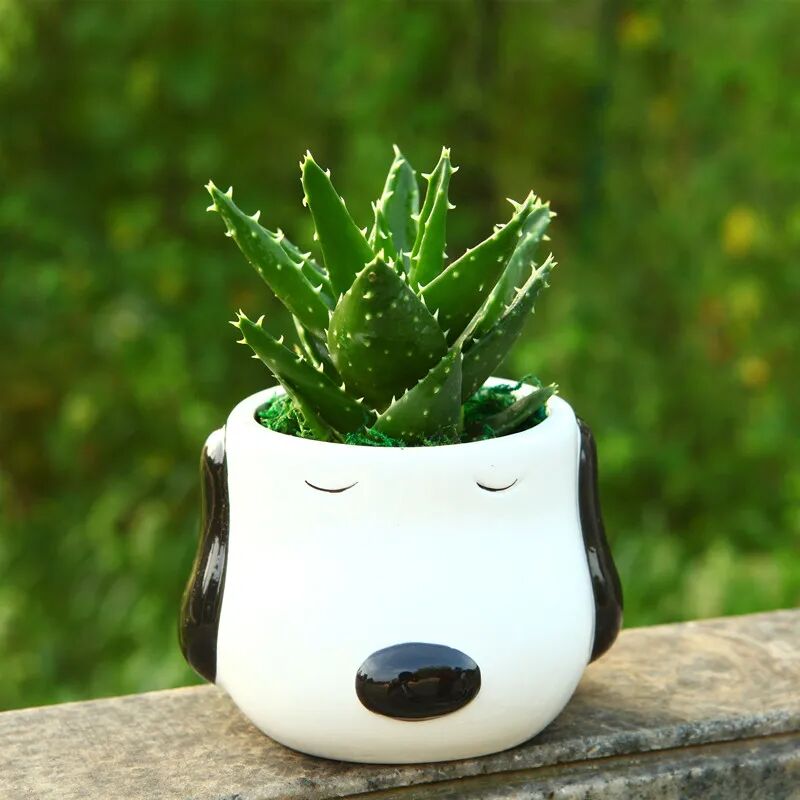
Aloe in the city that never sleeps
The leaves are lanceolate, emerald green, with golden sharp teeth on the edges of the leaves.
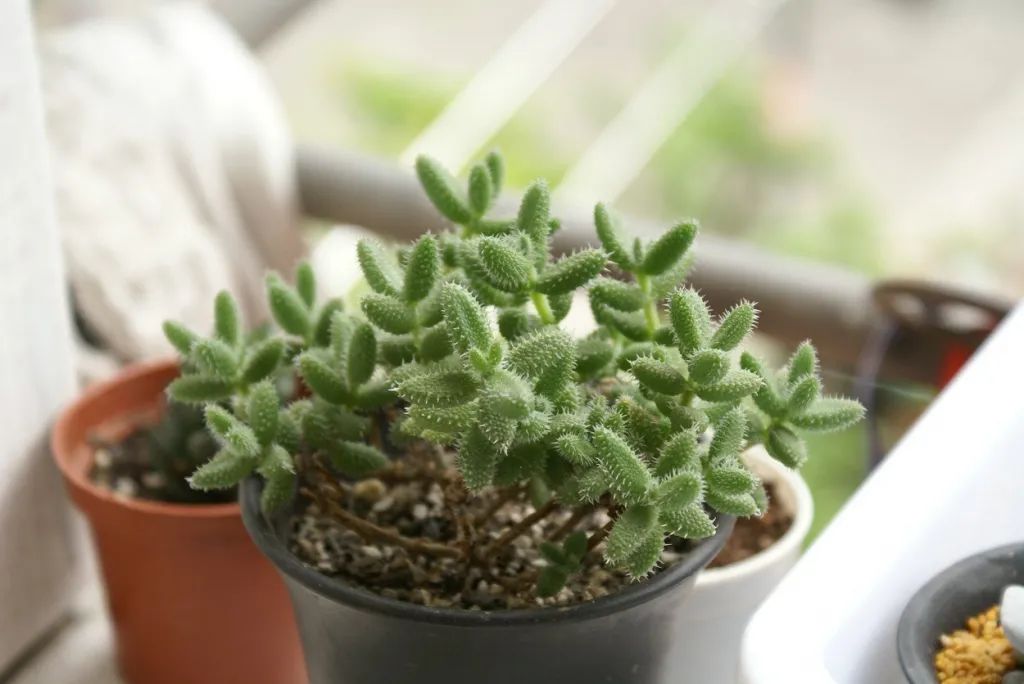
The leaves are ovate, densely hairy, and green (the leaf color gradually changes to red or purple when there is sufficient light). Its plant shape is compact, round and full.
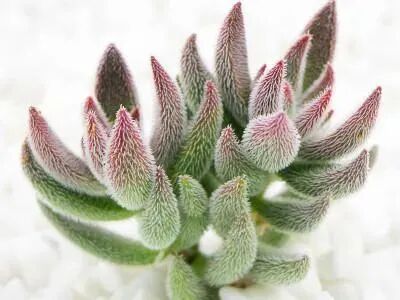
The leaves are short spoon-shaped, with rounded apex and small pointed, slightly curved inward, slightly thinner, and covered with white powder or waxy layer. The leaves are arranged in a standard rosette, giving the whole plant a slightly funnel shape. The leaf color is light green or blue-green.
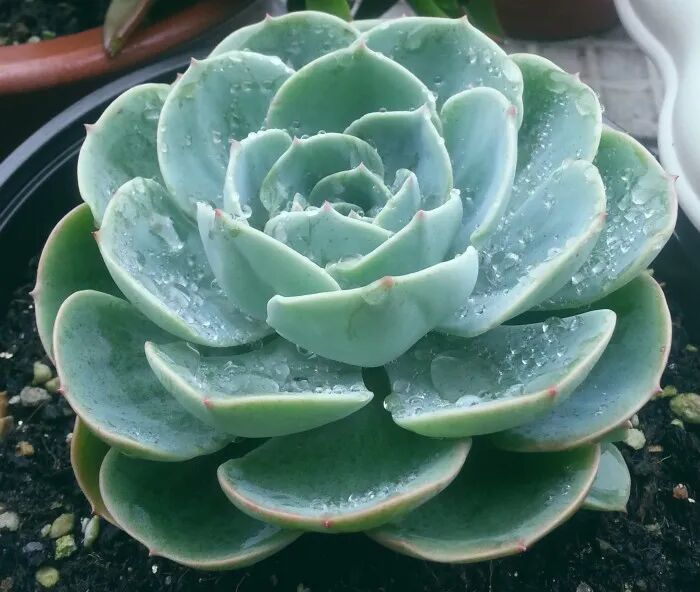
The leaves are spoon-shaped (the upper surface of the leaves is flat or slightly concave, and the lower surface is round and slightly convex), and the enclosure is rosette-shaped. The color of the leaves is light blue-green, with red edges at the tips, which will turn red when there is sufficient sunshine.
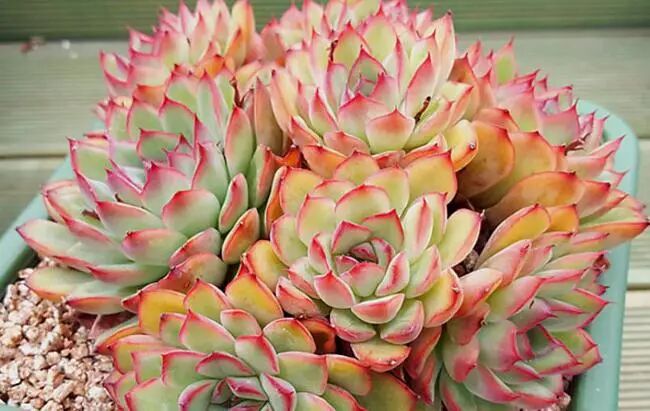
Leaf blade very fleshy, apex triangular, leaf cross alternately opposite, base united. The epidermis of the keel process of the leaf margin and dorsal leaf is duralized, and most of the leaf surface has fleshy teeth.
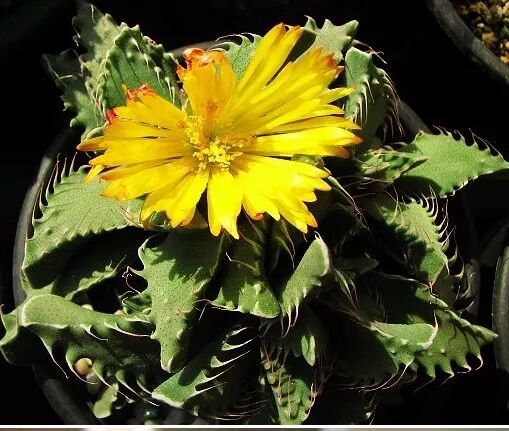
The blade is flat and slender, with a sharp tip at the front end and small villi on the leaf margin. The leaf blade is rosette-shaped ring, and the leaf tip and margin form brown or purple-red.
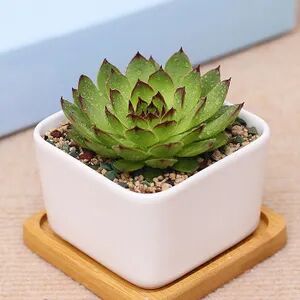
The blade is a bit thin, and the margin is thinner. Leaf leaves alternately opposite without petioles, and the base is connected together. The leaves are green in color, and the whole plant will turn reddish brown in late autumn and early spring when the temperature difference is large.
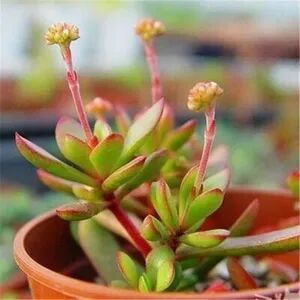
The leaves are fleshy and lanceolate, with white powder distributed on the surface. It has special sky blue leaves, which will turn gorgeous purple when exposed to strong light.
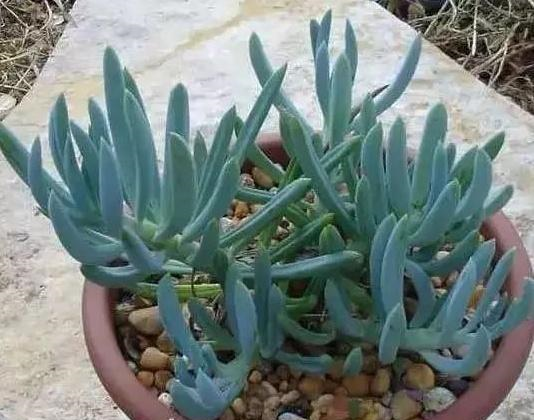
The leaves are oblong, opposite, closely arranged, and have hairy spots on the leaf surface. The leaves are light green to dark red in sufficient light conditions.
End of sharing in this issue...