When it comes to succulents with fluff, the "Rabbit Ear Family" is definitely a rich family. Not only is it rich in variety, but each has its own distinctive personality. While the leaves are covered with fine fluff, most of them have beautiful flounces, and their appearance is soft and cute yet cute!
Most of the fleshy rabbit ears are easy to branch and become clusters, which is very suitable for old-age piles. When raised, not only the leaves are thick, but also the fluff is very shiny, much like smart rabbit ears! Let's get to know 8 common kinds of rabbit ears and succulents!
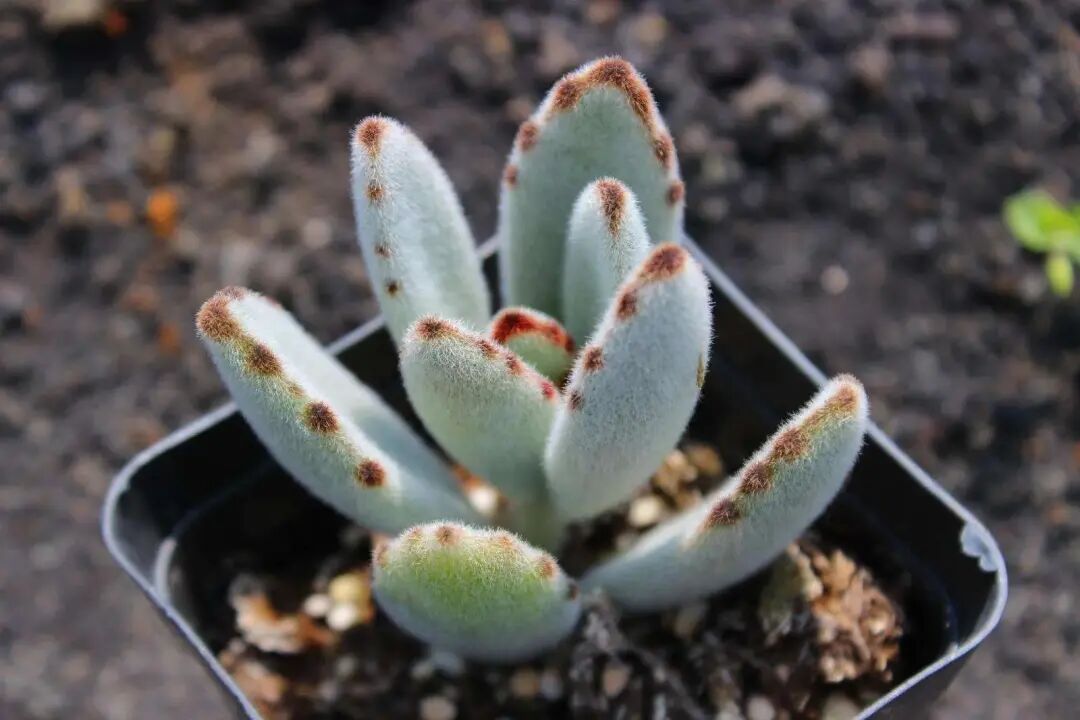
Moon rabbit ear, also known as gray rabbit ear and brown spotted rabbit ear, belongs to succulent plants of Crassulaceae and Galanaceae, and is the primitive species in the rabbit ear family. Many preferred species and horticultural varieties have been derived from it, such as panda rabbit ear, black star rabbit ear, Dharma rabbit ear, etc., which all have their powerful genes. The difference mainly lies in the depth and density of spots on the edge of leaves.
The leaves of moon rabbit ears are long and narrow, like erect rabbit ears, with a layer of fine gray fluff on the surface, and a circle of brown spots on the upper edge of the leaves.
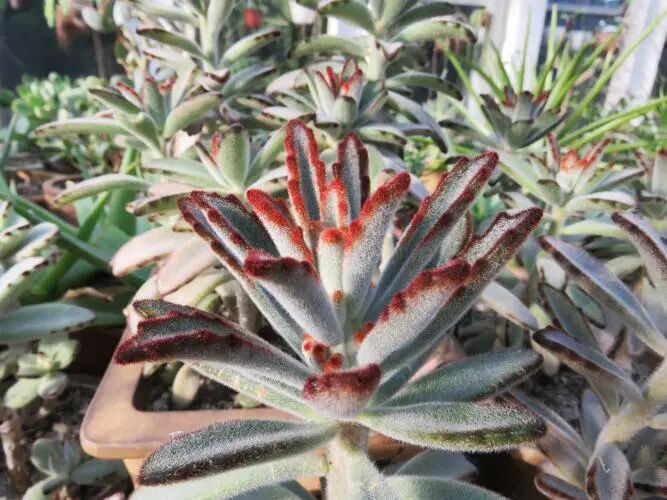
Black rabbit ears also belong to Crassulaceae and Galanaceae are succulent plants, also known as chocolate rabbit ears or rabbit ears. Its leaves are long and narrow, slightly thin, with a layer of black-gray to dark-brown fine fluff on the surface, and dark-brown serrated spots on the edge of the leaves. When the coloring effect is good, the tender leaves in the center can also show bright brown edges, and the background color of the leaves will turn green in the absence of sunlight.
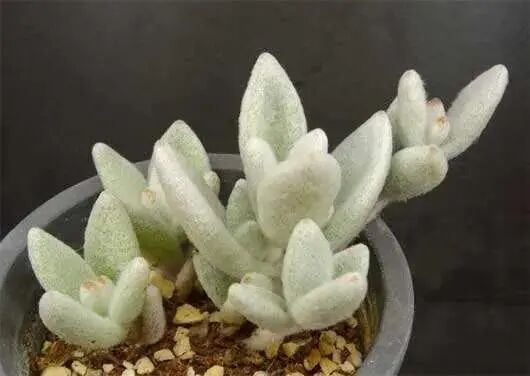
Fortunate rabbit ear is also called white rabbit ear. Its leaves are flat round oval, dark gray or gray-white, and the fluff on the surface of the leaves is relatively thick, even on the stem has It has dense fluff, which will reveal a green background when exposed to rain or water spray. The leaves are opposite to each other in pairs, and the central leaves are small and irregular. When there is sufficient light, the tips of the leaves will be a little reddish-brown.
The Monkey King's rabbit ear is also called golden rabbit ear and red rabbit. It is particularly cute among many rabbit ears, because although its leaves are shaped like rabbit ears, However, the fluff on it is like the Monkey King's golden vellus hair. Not only is the stem slender and tall, but the leaf color is changeable, and the edge of the leaf is not spotted. It is a relatively rare variety, and it is also a variety that rabbit ear players want to collect. The maintenance difficulty coefficient is more difficult than that of ordinary rabbit ears.
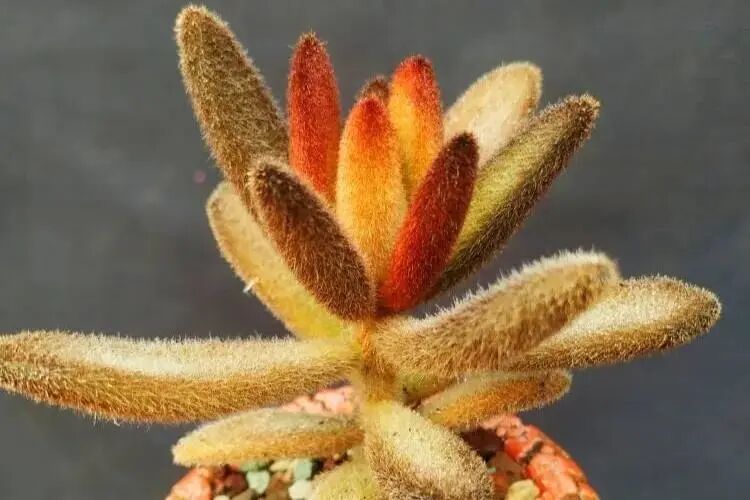
Golden rabbit belongs to rabbit ears with brocade. The background color of its leaves is gray-green or yellow-green, and some leaves can have golden spotted brocade. It can be said to be a collection of the characteristics of various rabbit ears. Not only are the leaves flat rabbit ear-shaped, but also the edges of the leaves have brown and dark brown spots, and the fluff is denser than that of ordinary rabbit ears. In particular, the fluff on the edges of the leaves is extraordinarily long and slightly reflective in the sun. It is also a popular variety nowadays.
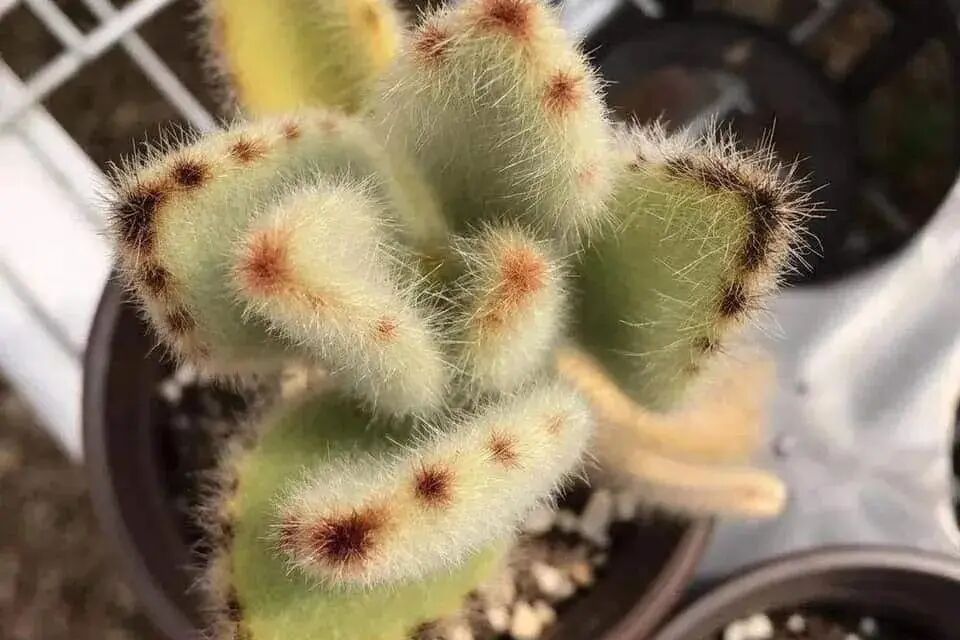
Teddy Bear Rabbit Ear has the same effect as Bear Boy, because not only its leaves are thick and dark brown, but also its leaves are like bear paw, and the spots on the edge are thick, like pointed claws. When its coloring effect is good, the spots on the edge of the leaves can turn golden brown, which is not only ornamental but also very interesting.
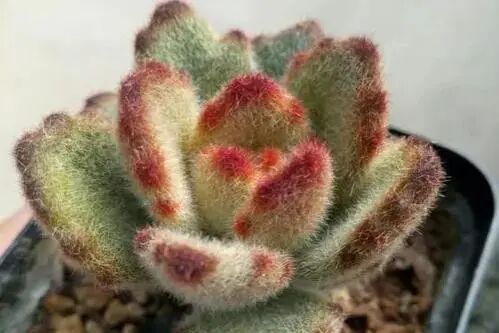
Chocolate rabbit ears are also called chocolate soldiers, and the leaf background color is Dark coffee or chocolate color, the leaf color can change with the change of light and temperature difference, the leaf shape is long spoon-shaped, and the spots on the edge are not obvious. In the absence of sunlight, the leaf color will gradually turn green. It belongs to a variety that is easy to branch and grow in groups, because it is similar in appearance to Black Rabbit Ear, the Monkey King and other varieties, so it is easy to be confused.
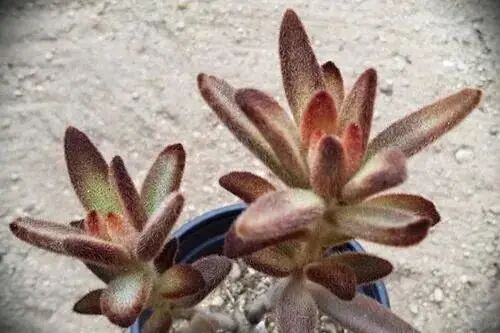
Red rabbit ear, also known as Jinhuangxing, belongs to the succulent plant of Sedum family and Pseudolitus family. Because its appearance is similar to rabbit ears, it is classified into the rabbit ear family. It has a high degree of recognition. Its leaves are flat, long spoon-shaped, with pointed apex, and the leaves are covered with a layer of gray fluff. When the coloring effect is good, the edges of the leaves can show red champagne color, with red velvet-like texture from a distance, and the tender leaves in the center are slightly green. It is a variety that is easy to grow branches, suitable for controlling and raising succulent old piles, and it blooms quite beautifully.
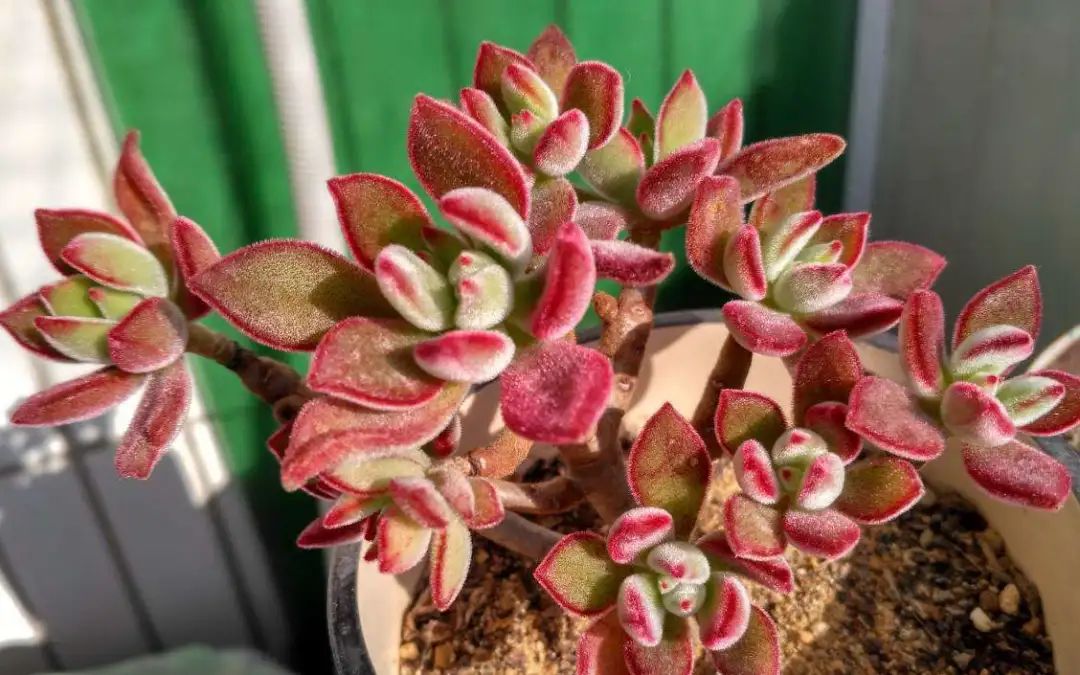
In addition to the eight kinds of rabbit ears listed above, in fact, there are many horticultural hybrid or evolutionary varieties in the rabbit ear series. Most of them retain the genes of the original species of moon rabbit ears, but the brown spots on the edges of the leaves are thick and light, so they are given different trade names. In fact, there is no obvious difference in daily maintenance. These well-known ones are often classics!
-
Rabbit ears are fleshy and like sunny, warm and dry environment. They are not resistant to high temperature and sun exposure, and at the same time they are not resistant to cold. Proper shading is needed during high temperature in summer, and long-term rain is avoided; The overwintering temperature in winter should not be lower than 5 ℃ to avoid frostbite of leaves.
-
Propagation is mainly based on branch cuttings, and leaf cuttings need to keep a section of stem, otherwise it will not be easy to succeed.
-
It has very few pests and diseases, but it is easy to grow and fade when it lacks sunlight and waters too frequently. Daily maintenance should avoid being placed indoors for a long time, and diluted thin fertilizer can be applied in spring and autumn to help grow.